← All case studies

Insurance Investigation

Reconciling Inventory Systems in a Major Insurance Investigation

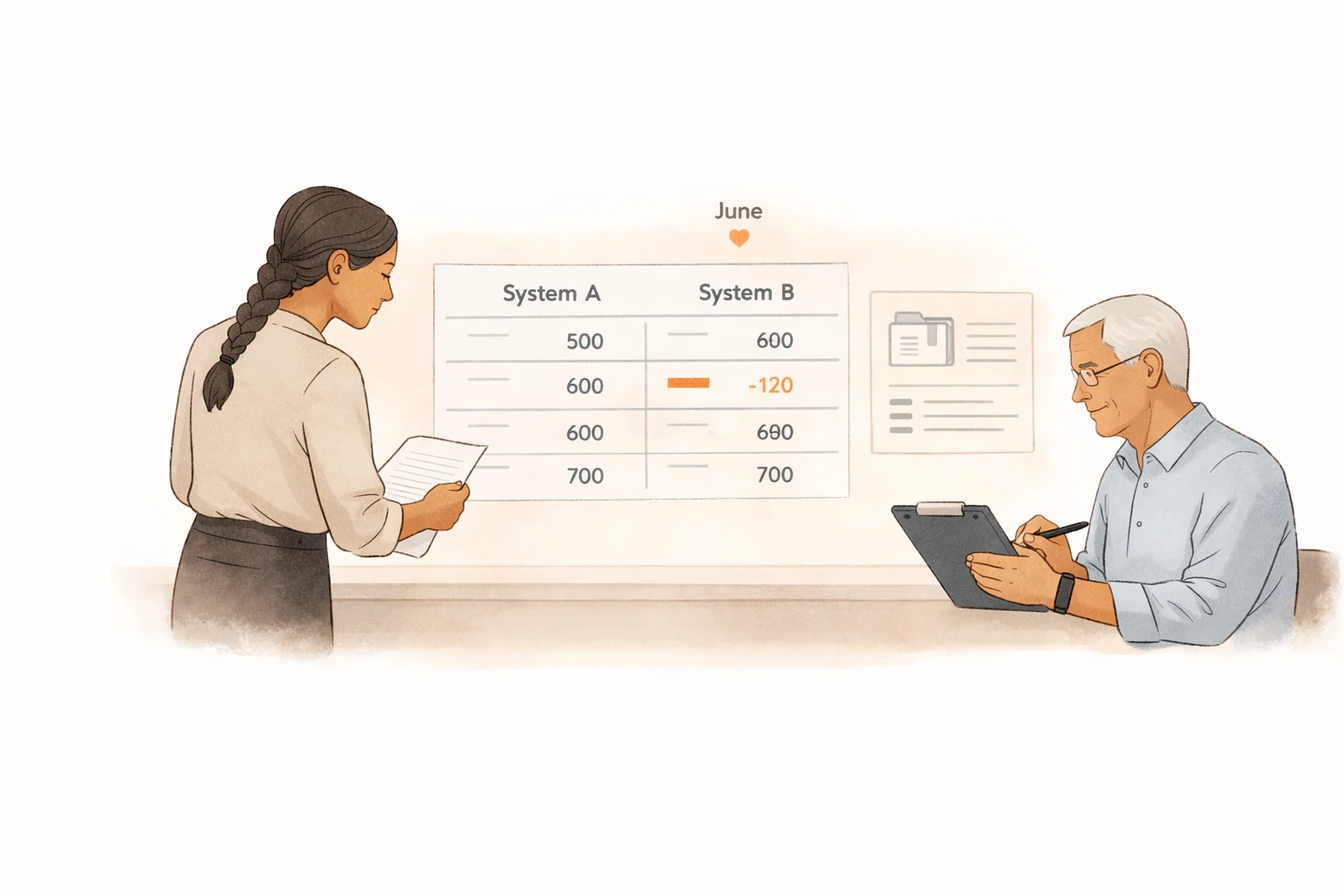
When a significant discrepancy emerged between physical stock counts and ERP records at a major industrial processor, the investigation team used Docwize to bring the underlying data together and identify where two independent inventory systems diverged.

Illustration showing two inventory systems being compared side by side, with a discrepancy highlighted in the reconciliation table

Reconciliation view

Inventory System 1Inventory System 2Variance periodInventory (000s)130140150160ΔΔΔJanFebMarAprMayJunJulAugSepOctNovDec

Two independent systems reconciled

Monthly exports from both inventory systems were brought into a single analytical environment alongside ERP data.

Cross-system divergence identified

The analysis surfaced specific periods where the two systems fell out of alignment, focusing investigative effort on the most relevant records.

Source documents linked to records

Operational documents were linked directly to corresponding ERP entries and inventory exports, enabling transaction-level tracing.

Defensible investigation output

The structured analytical environment supported findings that could withstand scrutiny as part of a formal insurance investigation.

The challenge

A major industrial processor reported a significant discrepancy between physical inventory and its ERP records. The investigation team faced a core question: did the reported stock loss reflect actual theft, or inconsistencies embedded across the organisation's own inventory management processes? Two independent inventory systems were in use during the relevant period, and neither on its own was sufficient to resolve the matter.

The approach

Docwize ingested operational records, monthly exports from both inventory systems, and ERP transaction data, then structured them within a single analytical environment. Key inventory fields were extracted and normalised across all three sources, enabling systematic comparison of monthly values and direct linkage of ERP entries to inventory movements.

  • Ingest operational records and monthly exports from both inventory systems
  • Extract and normalise key inventory fields across all data sources
  • Link ERP transaction data with the two independent system records
  • Compare monthly values across systems to surface divergences
  • Identify and prioritise periods with the greatest variance for investigator review

What the analysis revealed

Where the systems diverged

The analysis identified specific periods where recorded values across the two inventory systems fell out of alignment, giving investigators a focused evidence base rather than an undifferentiated mass of records.

Variance concentration

Discrepancies were not evenly distributed across time. Specific months showed materially higher variance, making it possible to prioritise review effort rather than treating all periods equally.

Prioritised periods for review

Docwize surfaced the time periods with the greatest cross-system variance, helping investigators direct their attention and resources to the records most likely to be material to the insurance matter.

Outcome

The analytical work supported investigators in distinguishing between record-keeping inconsistencies and potential physical loss. By reconciling the two inventory systems within a governed, structured environment, the team was able to approach the matter with a defensible evidentiary basis — rather than relying on any single system's account of events.

Working through a complex, document-intensive matter?

Docwize helps investigation teams bring large, disparate document sets into a structured analytical environment. Get in touch to discuss your matter.